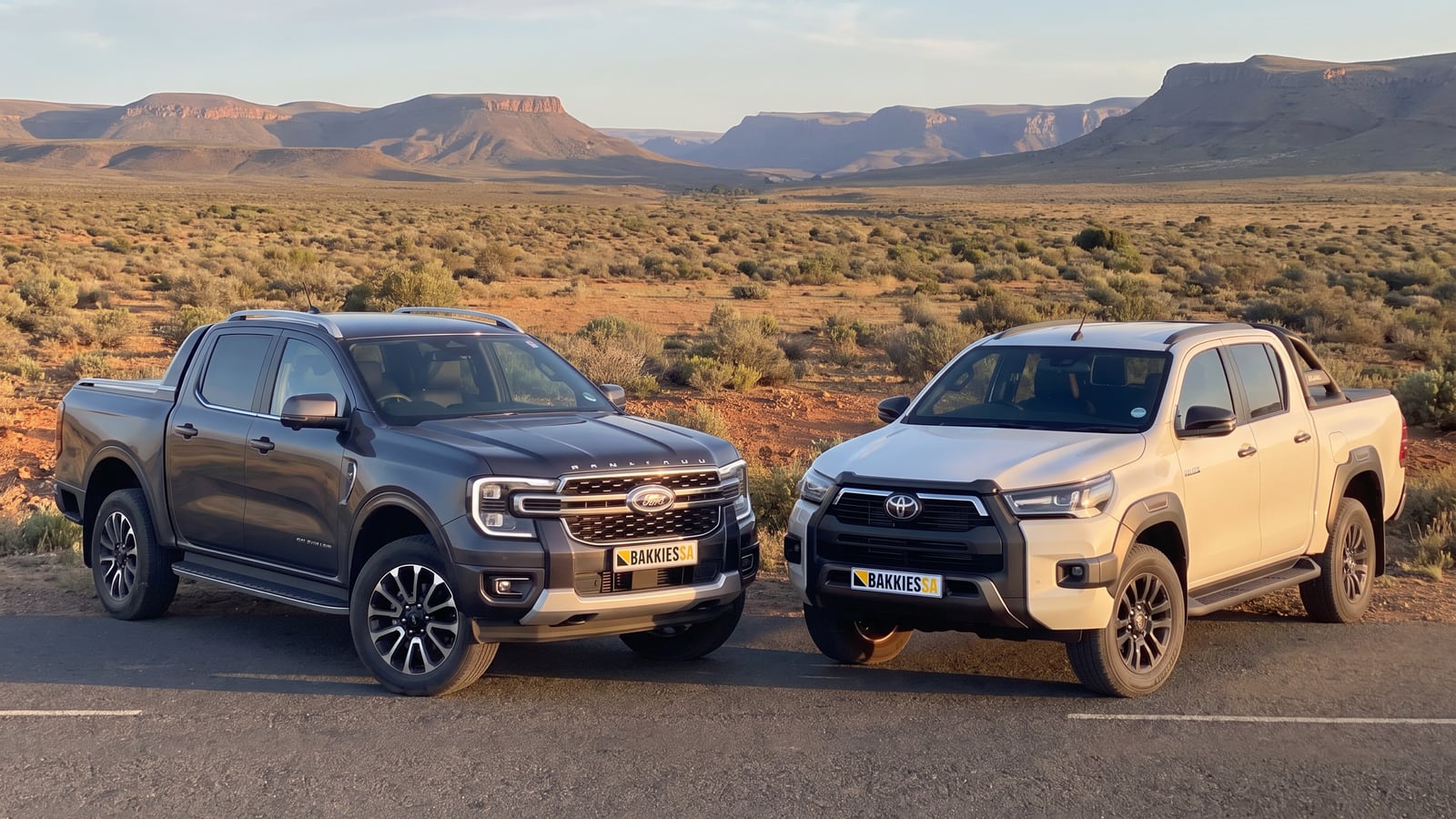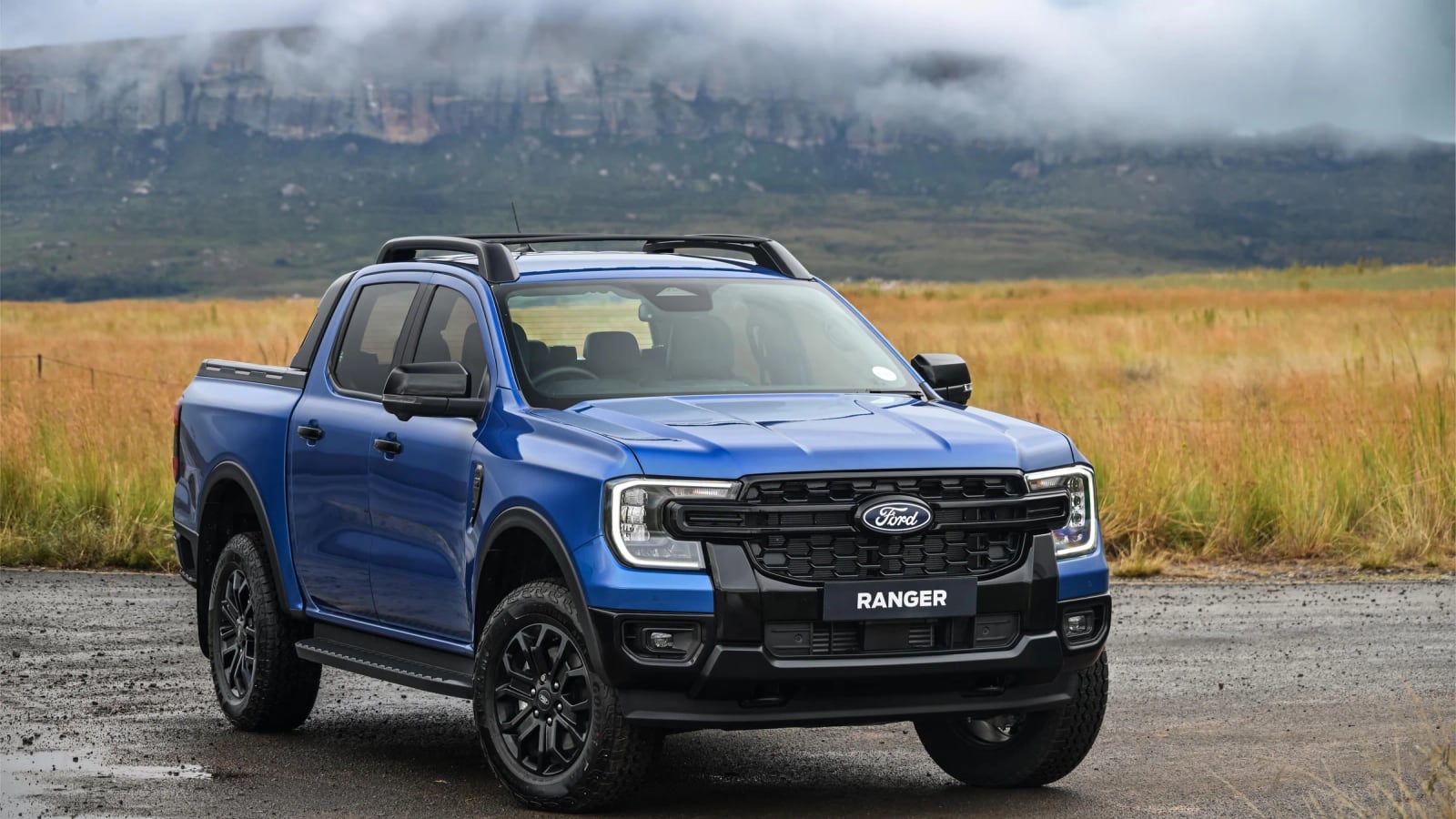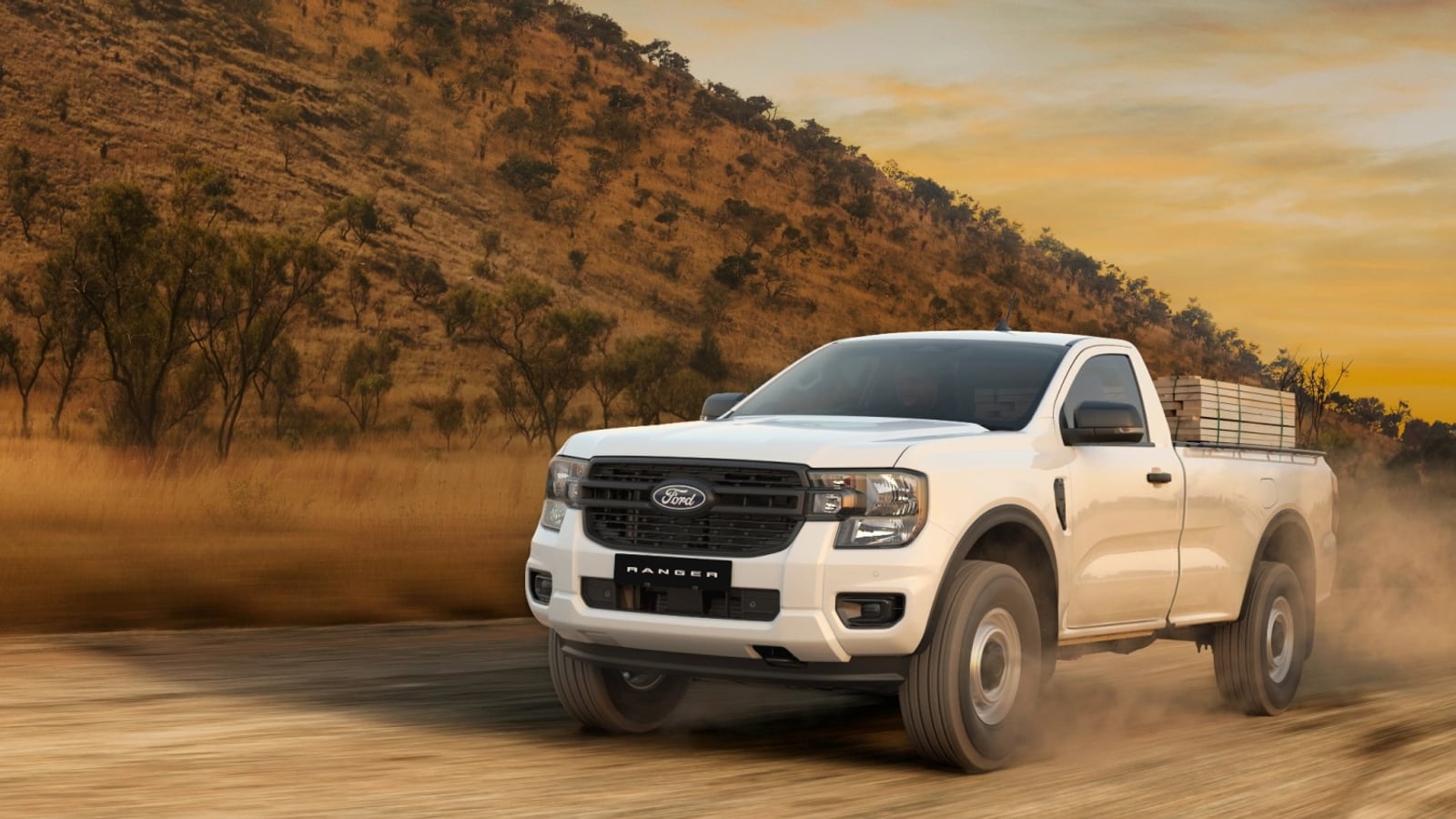
South Africa builds the plug-in hybrid Ford Ranger. Every single one in the world comes out of the Silverton plant in Pretoria.
You cannot buy one.
Every unit is loaded onto a ship and sold in Europe, Australia and New Zealand. Ford has not put it in the local price list. When the updated Ranger range launched here in March 2026, the plug-in was not in it. Asked why, Ford says a local launch is “under consideration”.
That is a decent summary of electrified bakkies in South Africa. The technology is here. The sums often are not.
There are 27,195 bakkies for sale on this site today. Exactly 302 of them are hybrid, plug-in or electric. That is 1.1 percent of the market.
Here is every one you can actually buy, what it costs, and what the numbers say when you look them up yourself.
What you can buy today
| Bakkie | What it is | New price | Live listings | Middle asking price |
|---|---|---|---|---|
| Toyota Hilux Legend 48V | Diesel with a small helper | R947,500 | 66 | R899,295 |
| Toyota Fortuner 48V | Diesel with a small helper | R851,500 | 33 | R789,950 |
| BYD Shark 6 | Plug-in petrol | about R990,000 | 170 | R969,950 |
| Changan Hunter Reev | Plug-in, petrol generator | R799,900 | 31 | R749,900 |
| GWM P500 HEV | Petrol, charges itself | R999,900 | few | new only |
| Foton Tunland V7 and V9 | Diesel with a small helper | R689,900 to R799,900 | few | new only |
| Geely Riddara RD6 | Pure electric | from R611,900 | few | new only |
Live listing counts and asking prices come from this site and change daily. The P500, the two Fotons and the Riddara are all new arrivals, so the used pool is still forming.
Two of those seven are not really electrified in the way buyers expect. Start there, because it is the one most South Africans will end up buying.
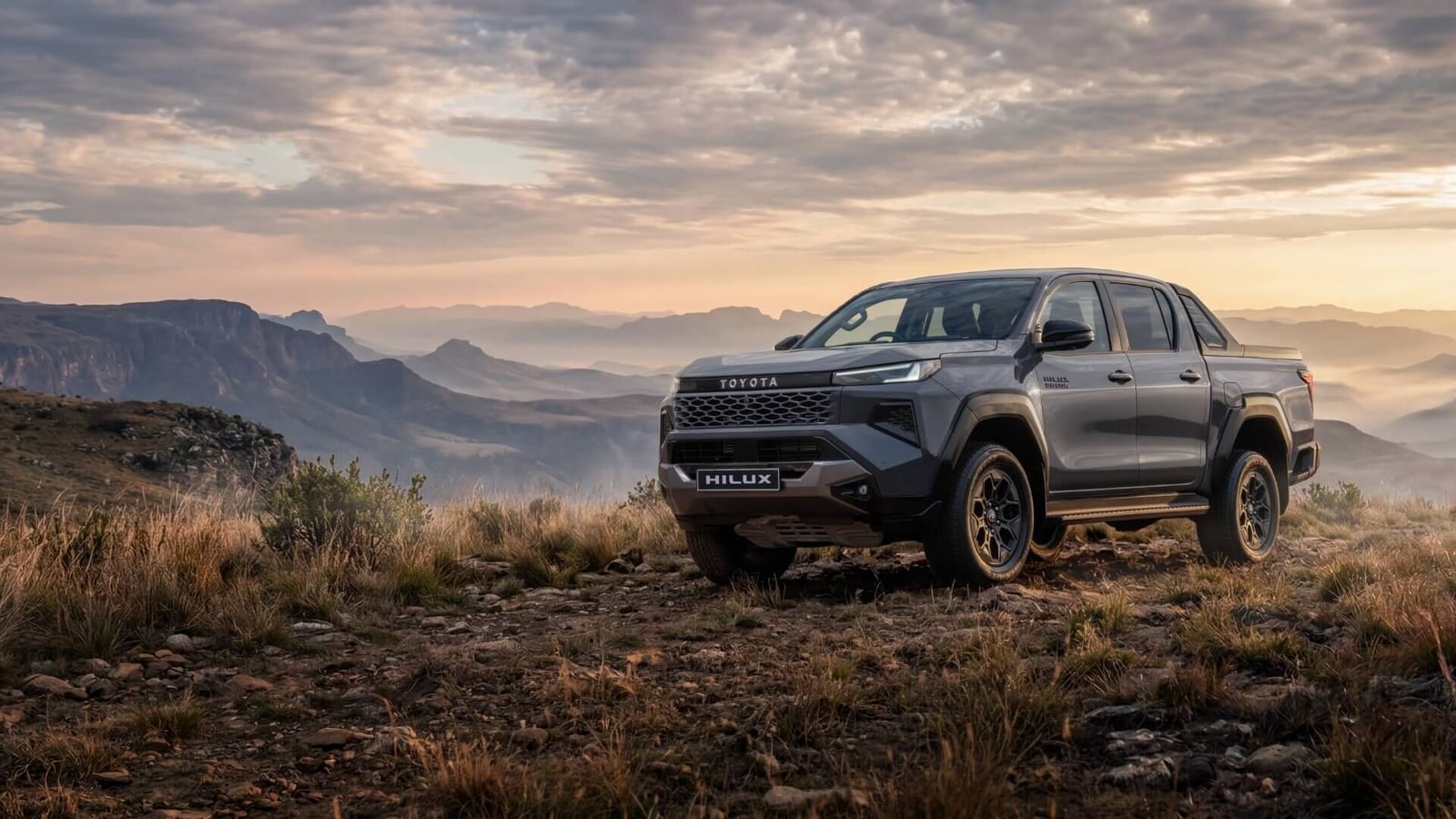
The Toyota 48V: the most popular one, and the least electric
Toyota sells a 48V Hilux and a 48V Fortuner. Most people call them hybrids. Toyota Australia refuses to.
Their sales boss said it plainly: “Most of you have called it a mild hybrid. We don’t, and there’s a reason we don’t.”
The reason is simple. The car cannot move on electricity. Not one metre.
Here is what is actually bolted on. A belt-driven motor replaces the normal alternator. It spins one way to make electricity and the other way to give the engine a small push. It feeds a lithium battery that weighs 7.6 kg and holds about as much as four cordless drill batteries. The battery sits under the back seat, dry and out of harm’s way.
What you notice as a driver is the stop-start. The engine cuts at the robots and restarts fast and quietly. The idle drops from 720 to 600 revs, so it is quieter standing still. The aircon keeps running with the engine off.
Two South African testers could not feel the power assist at all. One called the whole thing “so imperceptible (or tame)” that they could not measure the benefit. A British farming magazine called it “a fancy starter motor”.
What Toyota’s own paperwork says about the fuel saving
This is the part nobody reports, and you can check it yourself. Toyota South Africa publishes a spec sheet for every model.
On the Fortuner, each 48V version sits next to an identical non-48V version. So the comparison is clean.
| Fortuner | Non-48V claimed | 48V claimed | Saving |
|---|---|---|---|
| 2.8 GD-6 4x2 | 7.6 L/100 km | 7.6 L/100 km | nothing |
| 2.8 GD-6 4x2 VX | 7.6 L/100 km | 7.6 L/100 km | nothing |
| 2.8 GD-6 4x4 | 7.9 L/100 km | 7.6 L/100 km | 0.3 L |
| 2.8 GD-6 4x4 VX | 7.9 L/100 km | 7.6 L/100 km | 0.3 L |
On Toyota’s own official figures, a 4x2 Fortuner buyer saves nothing. The 4x4 buyer saves 0.3 litres per 100 km.
The 48V version costs R8,500 more on a 4x2 and R11,100 more on a 4x4.
At R30.05 a litre for inland diesel, that 0.3 litre saving is worth about R90 per 1,000 km. Drive 25,000 km a year and the R11,100 comes back in just under five years.
On the 4x2 there is nothing to come back.
The older Hilux did better on paper. Its 4x4 was rated 0.6 litres better with 48V, which pays back the old R15,500 premium in about three and a half years at today’s diesel price.
On the new Hilux that launched in June 2026, you cannot work it out at all. The 48V only comes on the Legend, and there is no non-hybrid Legend to compare it against. You are not choosing the 48V. You are choosing the Legend, and it comes along.
What real cars actually use
Every South African road test of a 48V Toyota has missed the claim by a wide margin.
| Test | Claimed | Measured |
|---|---|---|
| CAR magazine, Legend 4x4 | 7.5 | 10.1 |
| Business Day, new Legend 4x4 | 7.5 | 11.0 |
| The Citizen, Legend 4x4 | 7.4 | 9.5 |
| A road test of the Raider 4x2 | 7.4 | 9.5 |
For comparison, a test of a non-48V Hilux Legend 55 measured 8.2 on the highway and 9 to 10 mixed.
Different routes and different drivers, so this does not prove the 48V uses more fuel. It does show that nobody in South Africa has yet driven one and seen the saving on the trip computer.
Two honest points in its favour. The stop-start is genuinely nicer in traffic. And the 48V hardware takes nothing away from the bakkie.
| What matters on a bakkie | Hilux Legend 48V |
|---|---|
| Payload | 795 kg |
| Towing, 4x4 | 3,500 kg |
| Ground clearance | 312 mm |
| Low range | Yes |
| Rear diff lock | Yes |
Toyota mounted the motor high on the engine, so the wading depth survives too.
One number gets misquoted everywhere: the 4x2 Legend 48V tows 2,800 kg, not 3,500 kg. Only the 4x4 tows 3,500 kg.
The 48V battery is covered for 8 years or 160,000 km, well past the 3-year vehicle warranty.
BYD Shark 6: fast, clever, and a tonne short
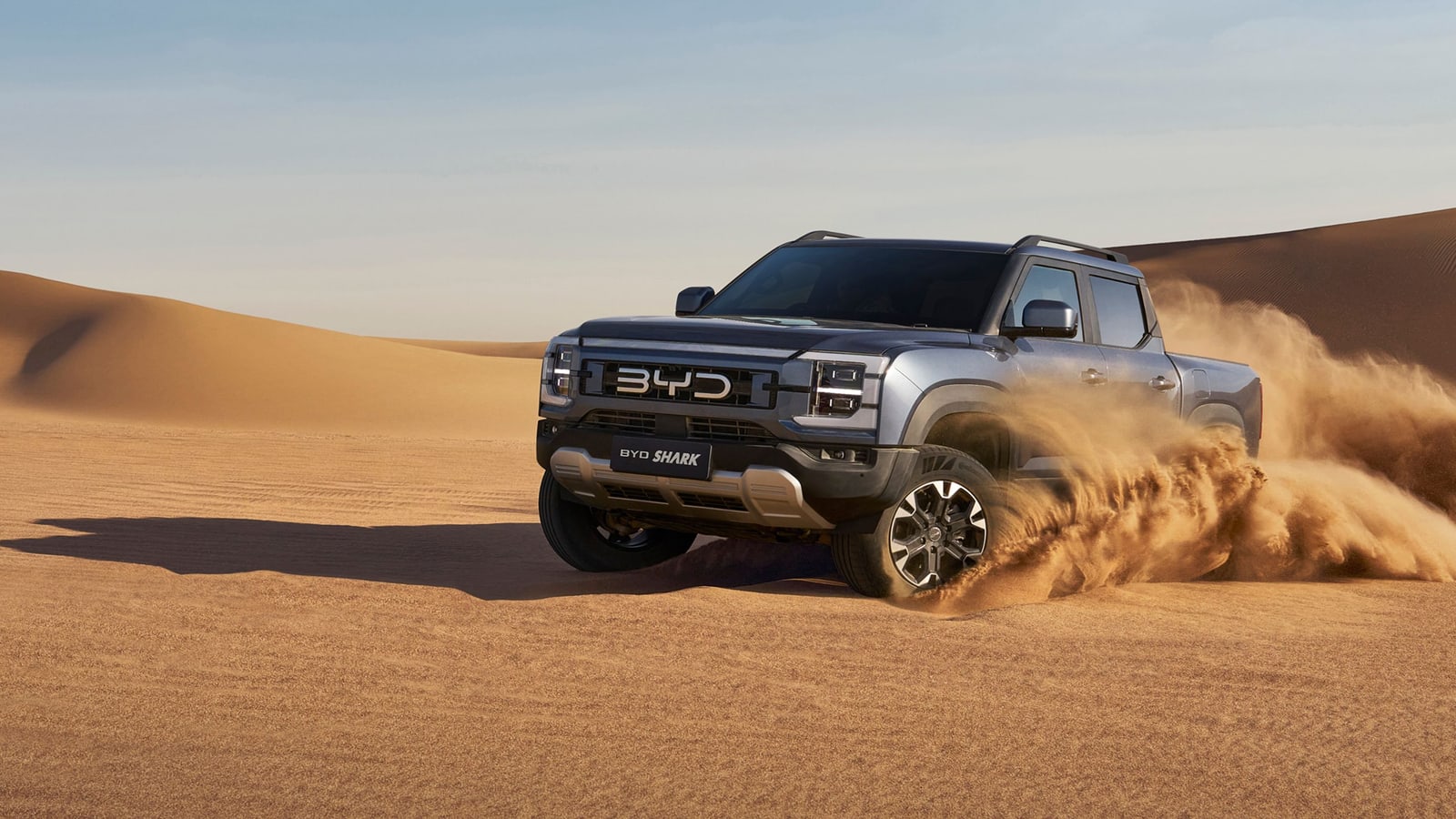
The Shark 6 is the one everyone talks about. It is a proper plug-in: a 1.5 turbo petrol engine, a motor on each axle, and a 29.6 kWh battery you charge at the wall.
It makes 321 kW and 650 Nm. It hits 100 km/h in 5.7 seconds. A road test measured 5.66. It is faster than any diesel bakkie sold here.
Plug it in every night and a commute costs almost nothing. One owner drove 1,150 km on about R650 of fuel. The same trip in his old Amarok cost R2,400.
Then the numbers turn.
Range on battery. BYD’s marketing has said 100 km. The more honest figure is 80 to 85 km. A South African owner three weeks in got 91 km at best, in town. Overseas testers got about 80.
Fuel use when the battery is flat. About 10 litres per 100 km, measured by CAR magazine against a 9.6 claim. Remember this is a 2.7-tonne petrol bakkie once the battery is empty.
Towing. The Premium tows 2,500 kg braked. A Hilux 4x4 tows 3,500 kg. You are a full tonne down.
The pricier Performance is rated at 3,500 kg, but its combined weight limit means towing that much leaves the bakkie almost empty.
Towing fuel use. An Australian tow test pulled a 2,400 kg caravan and measured 17.4 litres per 100 km. The tank holds 60 litres. That is under 300 km between fuel stops, by the testers’ own sums.
Payload. 790 kg, and it disappears fast. An accessories firm did the arithmetic: two people, an aluminium canopy, drawers, a fridge, recovery gear and a caravan on the ball uses 565 kg. That leaves 225 kg. Their words: “there is no room for a third passenger or heavy gear.”
And it is not a 4x4 in the old sense. There is no low range. There are no diff locks. There is no mechanical connection between the axles at all. Software splits the drive. One reviewer found it cuts power completely when it senses a wheel spinning. On a farm that is the one failure you cannot work around.
There is almost no engine braking either, because of the single-speed drive and the small engine. Going down a long hill loaded, you are on the brakes.
The towbar is rated for towing only. It is not a recovery point.
A recall is live right now. In September 2026 BYD recalled 32,009 Shark 6s in Australia. The spare wheel can work loose and fall onto the road. BYD’s own wording is that it “may create a hazard to other road users and potentially cause serious injury or death”. BYD South Africa has told owners to contact a dealer for an inspection. It has not published how many South African bakkies are affected. If you own one, book it in.
What they are asking. There are 170 Shark 6s listed on this site. The middle one asks about R970,000. The range runs from R787,900 to R1,250,000, and the middle car has done 6,000 km. These are nearly new cars coming back to market.
Early ones are telling. A 2025 Premium with 27,000 km is asking R799,900. New it was R959,900. That is about 17 percent off the asking price in 18 months, and asking is always more than getting.
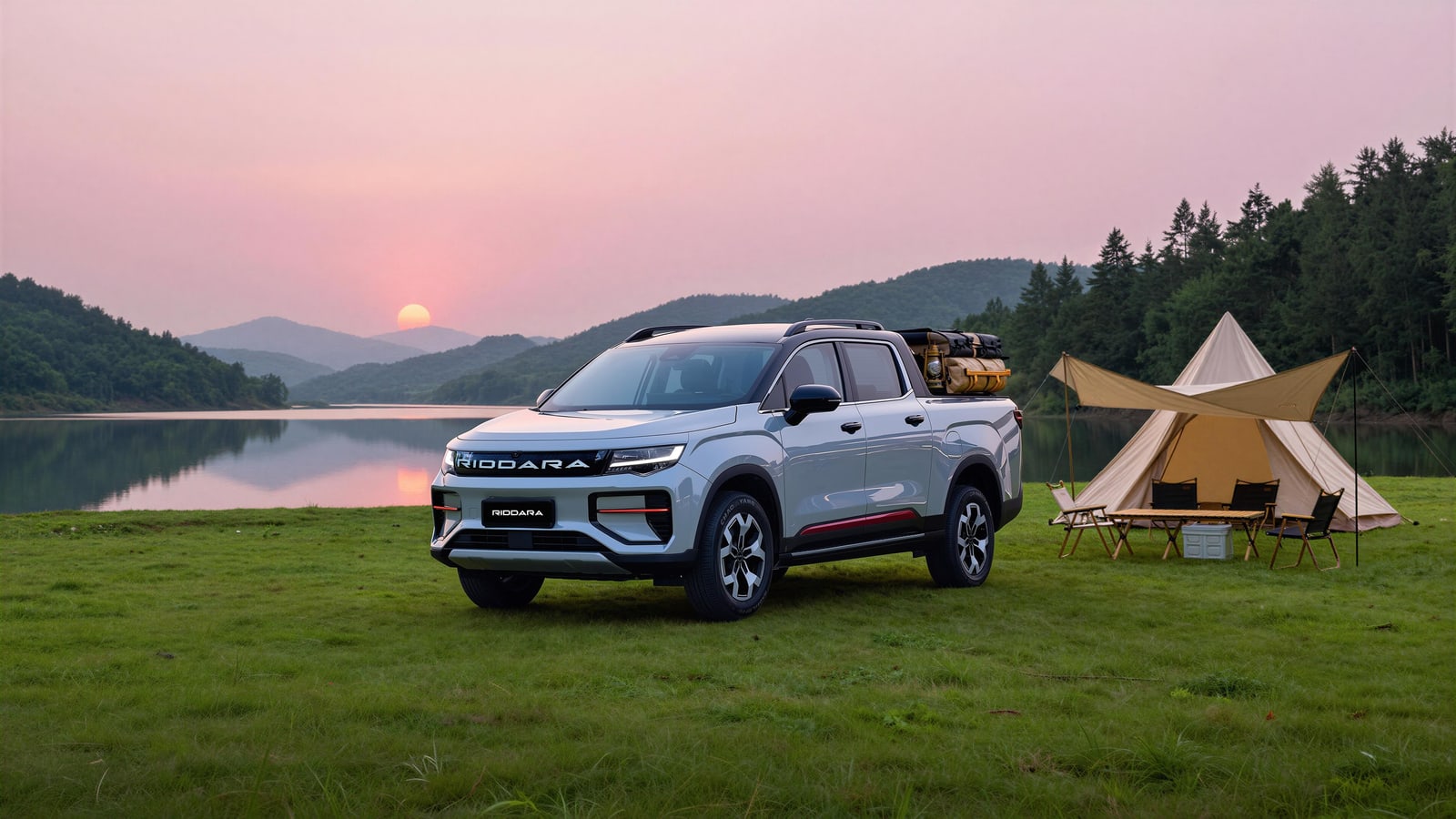
Geely Riddara RD6: the cheapest electric bakkie, and the most car-like
This one went on sale on 28 August 2026, so it is four weeks old.
It starts at R611,900, which is less than a new Hilux Legend. That makes it the cheapest electric bakkie in the country by a wide margin.
There is no engine at all. The cheapest version has a 63 kWh battery and one motor on the back axle. The dearer ones have 73 kWh and a motor on each axle, and the top one does 0 to 100 in 4.5 seconds.
Geely claims 369 km to 424 km per charge. That is on the old NEDC test, which is the most generous one in use. On the newer WLTP test the same cars are quoted at about 300 km to 350 km. Assume less again with a load or a trailer, and treat any long trip as a planning exercise.
The thing to understand before you buy one: it is not built like a bakkie. It has a car-style unibody, not a ladder frame. There is no low range and there are no diff locks, only software modes for sand and mud.
It tows 2,500 kg on the rear-drive version and 3,000 kg on the all-wheel-drive. Warranty is six years or 150,000 km, with eight years or 200,000 km on the battery.
Geely had about 35 dealers when it launched. If you are far from a city, ask where the nearest one is before you sign.
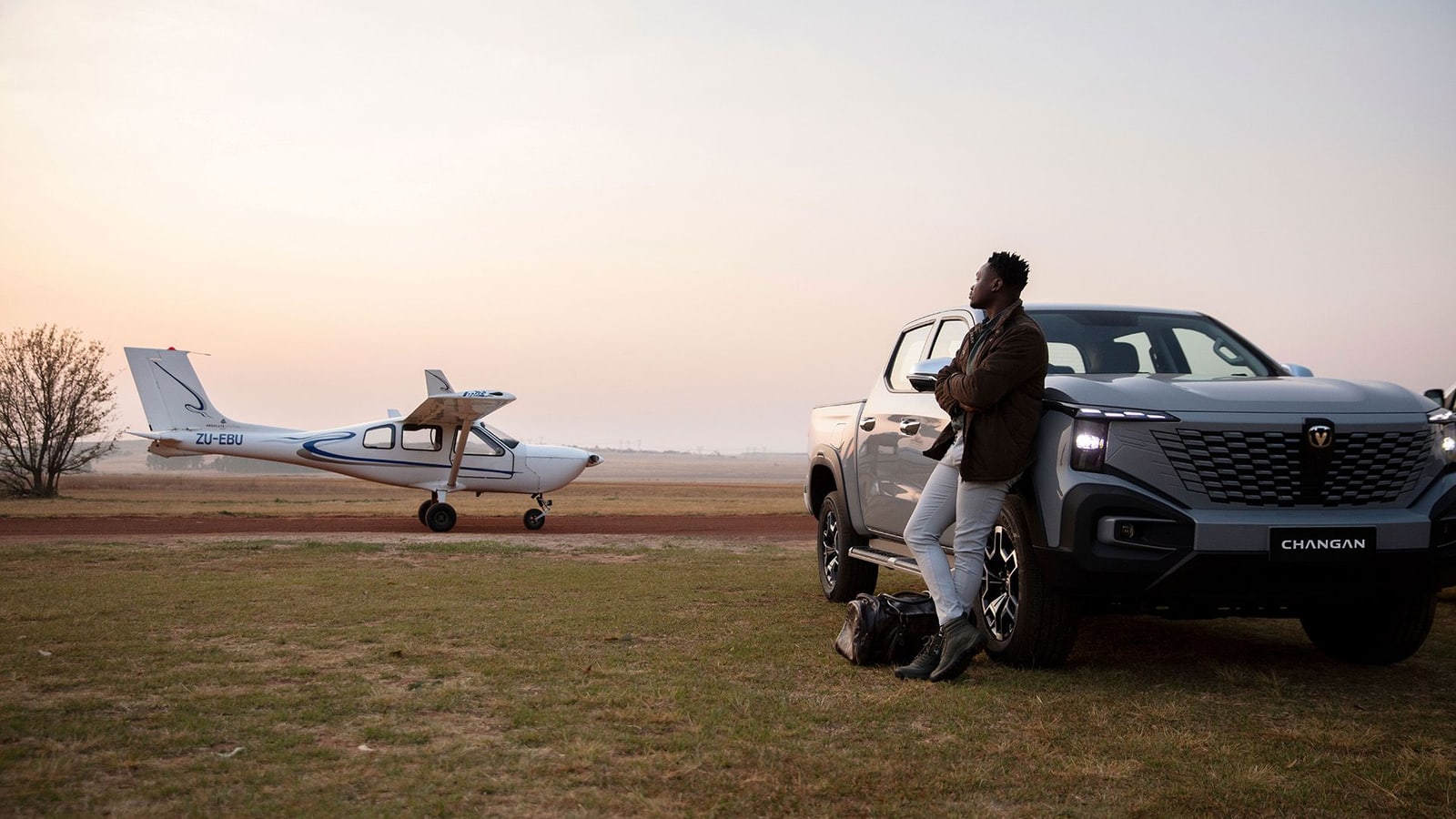
Changan Hunter Reev: the clever one for people without a charger
This is the most interesting of the lot for South African conditions, and the most misunderstood.
There is no electric Changan Hunter, whatever a listing says. The Hunter Reev is a range extender. The petrol engine never drives the wheels. It only makes electricity for the motors.
That means you never have to charge it. Plug it in at home and you get about 100 km of quiet electric driving, which two separate South African reviews both measured. Run it flat and the petrol engine takes over as a generator, using 8.6 to 9.4 litres per 100 km with a 70-litre tank.
So it works exactly where a pure electric bakkie does not: on a farm, in a small town, 300 km from the nearest charger.
It makes 200 kW and 470 Nm from a 31.2 kWh battery. It tows 2,200 kg braked. It has no low range and no diff locks, so it is not a hard-core 4x4. Two reviewers pointed out that the rear motor hangs exposed underneath.
Warranty is five years or 150,000 km, with eight years or 150,000 km on the battery and high-voltage parts. Changan had about 25 dealers in April 2026 and is aiming for 40 to 45.
There is one genuinely annoying quirk. It has no stop button. To shut the petrol engine off at the fuel pump, you have to lock the car with the remote.
We list 31 of them, asking a middle price of R749,900. The middle one has done 1,000 km.
One warning on the specs. Changan quotes about a tonne of payload. One published buyer’s guide says about 495 kg. That is a huge gap on the number that matters most to a bakkie buyer, and we cannot tell you which is right. Read the licence disc before you buy.
The two that work like actual bakkies
Lost in the noise are the two electrified bakkies that behave like work vehicles.
The Foton Tunland V7 and V9 are diesel bakkies with the same kind of small 48V helper as the Toyota. They run a 2.0 turbodiesel with 120 kW and 450 Nm through a ZF eight-speed. The V7 4x2 starts at R689,900 and the V9 4x4 tops out at R799,900.
What matters: 1,000 kg payload, 3,500 kg towing, and the 4x4 versions have front and rear diff locks. Ground clearance is 240 mm. Warranty is five years or 200,000 km. There are 63 dealers, mostly through a big listed motor group.
Those are the best carrying and towing numbers of any electrified bakkie sold here, by a distance.
The GWM P500 HEV costs R999,900 and charges itself, so there is nothing to plug in. A 2.0 turbo petrol and one motor make 255 kW and 648 Nm. It tows 3,500 kg and it has low range, which the Shark and the Riddara do not.
Its weakness is fuel. GWM claims 9.8 litres per 100 km. CAR magazine’s launch drive got 13 to 14. One road test is headlined around its fuel consumption. Payload is 735 kg, which is low, and lower than the diesel versions.
GWM’s real advantage is boring and important: 90 to 100 dealers, and a seven-year warranty and service plan.
What this all costs to run
Diesel is not cheap any more. Inland 50ppm was R30.05 a litre in September 2026, up R3.15 in a single month.
That should make the electrified case stronger. Mostly it does not, for two reasons.
First, South Africa taxes electric cars harder than petrol ones. A vehicle imported from Europe pays 18 percent duty as a petrol or diesel model and 25 percent as an electric one. Then the luxury tax lands on top, on everything over about R250,000, and these bakkies are all R700,000 and up. There is no rebate, no cheaper licence, nothing.
The only incentive in the country is for factories, not buyers: a 150 percent tax deduction on plant for building these vehicles. It does nothing for you.
Second, charging. Load shedding was largely absent through the 2026 winter, so the 2023 fear is out of date. But the public network is still only about 400 to 445 sites, most of them in Gauteng, the Western Cape and KwaZulu-Natal. Off the N1, N2 and N3, a pure electric bakkie is a planning problem.
That is the whole argument for the plug-in and range-extender bakkies over the pure electric one. The Hunter Reev never needs a charger. The Shark 6 does not either, once you accept about 10 litres per 100 km.
So which one
If you tow or carry for a living: the Foton Tunland V9 4x4, or the GWM P500 if you want low range and a big dealer network. Or, honestly, a diesel Hilux or Ranger. A diesel Hilux in the R780,000 to R1,050,000 bracket asks a middle price of R842,200 on this site, and a Ranger R889,890. Both tow 3,500 kg without an asterisk.
If you drive in a city and can charge at home: the Shark 6 is hard to argue with on running cost. It is also the fastest bakkie here by a mile. Just understand what you are buying: a quick, clever, heavy lifestyle bakkie, not a work vehicle.
If you want the cheapest electric and you live in a metro: the Riddara RD6, with your eyes open about the unibody and the real range.
If you are 300 km from a charger but want the electric driving: the Changan Hunter Reev. It is the one that fits South Africa best on paper.
If you just want a Hilux: buy the Hilux. Do not pay extra expecting a fuel saving, because Toyota’s own figures do not promise a 4x2 buyer one. Buy the Legend because you want a Legend, and enjoy the stop-start.
A note on what we could not confirm
We would rather leave a gap than fill it with a number we cannot stand behind.
The Shark 6’s current list price appears as R989,900, R999,900 and R969,900 across different sources, so we have used live asking prices instead. The Changan Hunter’s payload is quoted as both about a tonne and about 495 kg. Nobody publishes what a Toyota 48V battery costs to replace out of warranty. And we could not confirm whether the Fortuner 48V gets the same 8-year battery cover as the Hilux, because Toyota’s Fortuner sheet does not carry that line.
If you own one of these and know the answer, tell us and we will update the page.
Questions people ask
Can you buy a hybrid bakkie in South Africa?
Yes, six of them. The BYD Shark 6 and the Changan Hunter Reev are plug-in bakkies you charge at the wall. The Toyota Hilux Legend and Fortuner have a small 48V system that helps the engine but cannot drive on its own. The GWM P500 HEV charges itself as you drive. The Foton Tunland V7 and V9 use the same kind of small 48V help on a diesel engine. The Geely Riddara RD6 is the only pure electric bakkie and it has no engine at all.
Is the 48V Toyota Hilux a hybrid?
Not in the way most people mean. It cannot move on electricity for a single metre. A belt-driven motor gives the engine a small shove and runs a smooth stop-start at the robots. The battery weighs 7.6 kg and sits under the back seat. Toyota Australia refuses to call it a hybrid at all. On Toyota South Africa's own figures the 4x2 version uses exactly the same fuel as the non-hybrid, so a 4x2 buyer pays about R8,500 for the stop-start, not for a saving.
How much does a BYD Shark 6 cost in South Africa?
There are 170 listed for sale right now and the middle one asks about R970,000. The cheapest asks R787,900 and the dearest R1,250,000. Most have done about 6,000 km, so these are almost new cars being resold. A new one lists near R990,000 for the Premium and R1,149,900 for the Performance.
Can a BYD Shark 6 tow like a Hilux?
No. The Premium tows 2,500 kg braked, which is a tonne less than a Hilux 4x4. The pricier Performance is rated at 3,500 kg but its combined weight limit means you tow that with the bakkie nearly empty. One tow test with a 2,400 kg caravan measured 17.4 litres per 100 km. On a 60-litre tank that is under 300 km between fills.
What is the cheapest electric bakkie in South Africa?
The Geely Riddara RD6, from about R612,000, which is less than a new Hilux Legend. It went on sale in August 2026. It has no engine, so nothing to fill. The catch is that it is built like a car rather than on a ladder frame, and it has no low range and no diff locks. Geely claims 369 km to 424 km per charge on an old and generous test. Expect nearer 300 km, and less with a load.
Which electrified bakkie works on a farm?
The Foton Tunland V7 or V9, or the GWM P500. The two Fotons are diesel bakkies with a small 48V helper, they carry a tonne, they tow 3,500 kg and the 4x4 versions have diff locks. The P500 has low range. The Changan Hunter Reev also works because it never needs a charger. The Shark 6 and the Riddara are the wrong tools: no low range, no diff locks, and the Shark cuts power when it senses a spinning wheel.
Do electric bakkies hold their value in South Africa?
Too early to say, and the early signs are soft. Shark 6s from 2025 with about 30,000 km are asking R800,000 to R830,000 against R959,900 new, so roughly 15 percent off asking after 18 months. Asking is not the same as getting. There are 170 adverts for a bakkie selling about 100 a month new, which is a lot of standing stock.
Figures are seller asking prices aggregated from South African listing platforms and dealers, not final selling prices. Most vehicles transact below asking. Updated continuously.
hybridelectricshark-6hiluxbuying-guidecomparison