A set of tyres is the biggest bakkie bill that is not a service or a crash. Most of us get it wrong twice. We buy the wrong tyre, then pay too much for it.
Start with one price. Take the Dunlop Grandtrek AT25 in the most common Hilux size. On 22 September 2026 it cost R2,999 a tyre at Tiger Wheel and Tyre and R2,265 at Supa Quick in Cape Town. Three phone calls are worth about R2,900 on a set.
Then the choice. Walk into a fitment centre and you will be steered to an all-terrain, and told you are paying extra for it. In the size most bakkies wear, that is no longer true.
The sizes below come off each maker’s own South African spec sheet, and the prices off two big retailers’ catalogues, all read on 22 September 2026.
The sticker in the door wins
Open the driver’s door and look at the pillar. There is a small plate there with a tyre size on it, and a pressure for empty and for loaded. That plate wins every argument in this guide.
Makers change sizes between grades and between years. The table below is what the current bakkies leave the factory on, not a substitute for that sticker.
| Bakkie and grade | Factory tyre | What you are looking at |
|---|---|---|
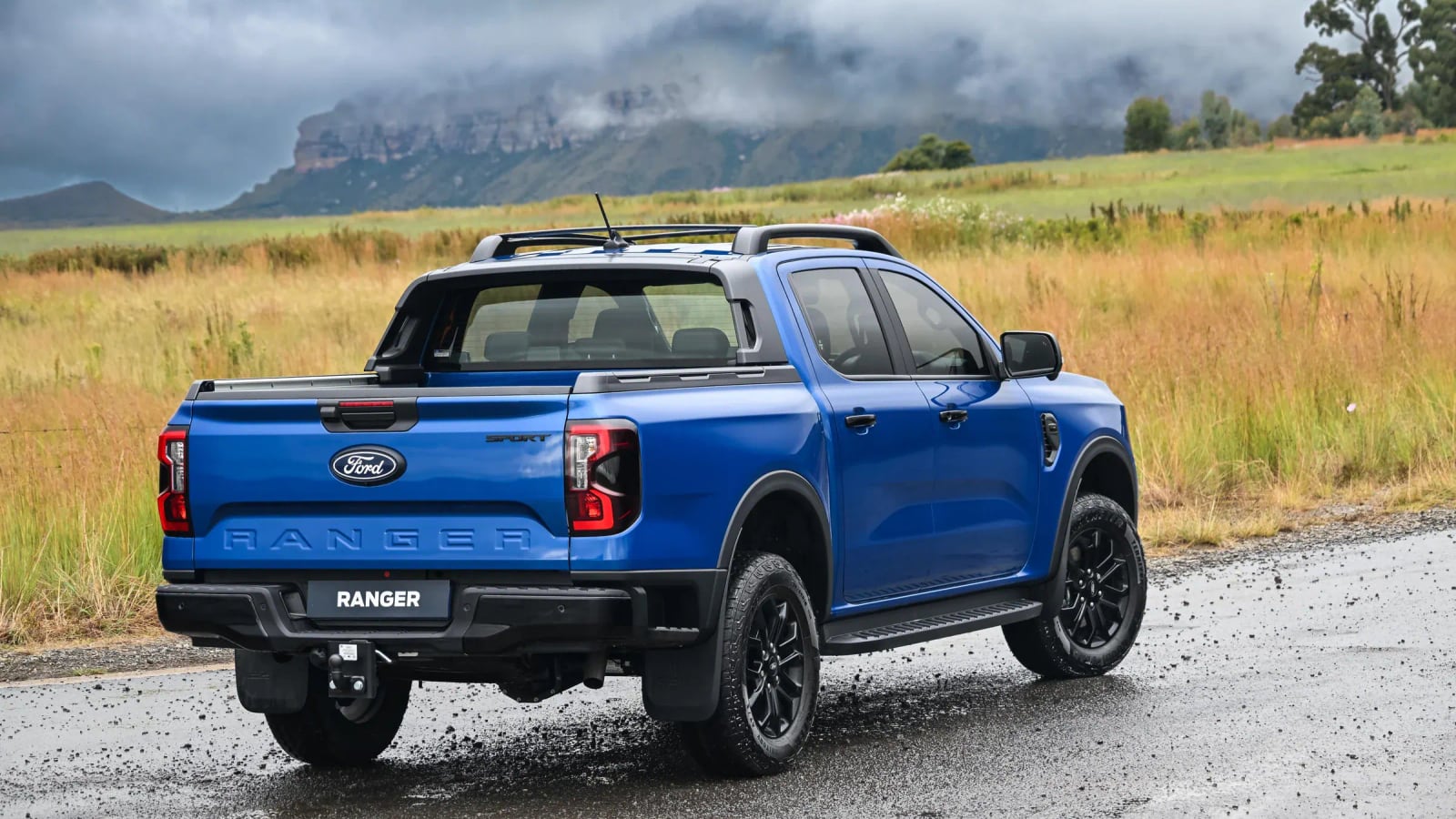
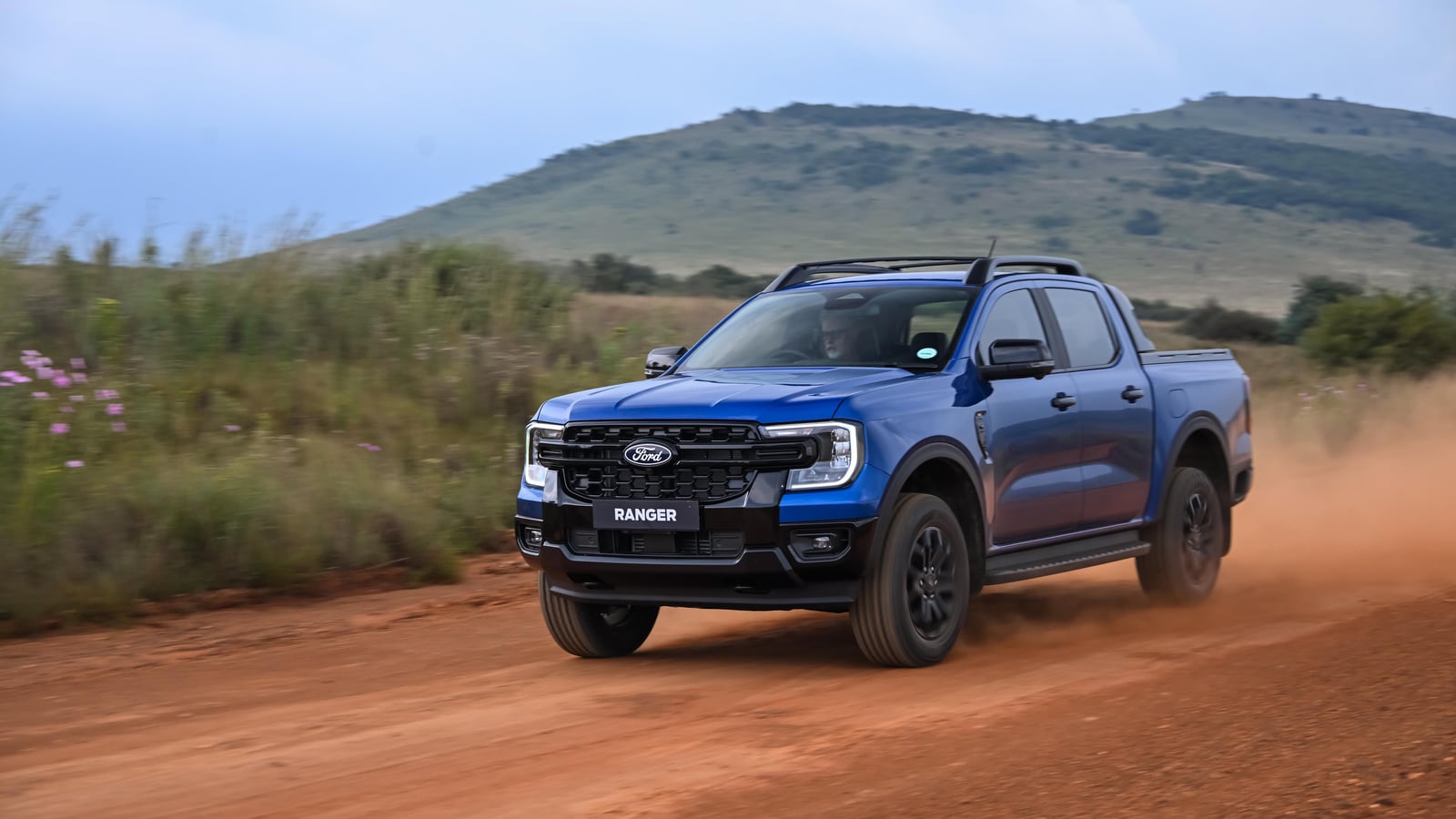
| Ranger XL, any cab shape | 255/70R16 | 16 inch steel wheels and a road tyre. The fleet bakkie |
| Ranger XLT, two wheel drive | 255/70R17 | 17 inch alloys, road tyre |
| Ranger XLT 4x4 | 255/70R17 | Same size, but an all-terrain from the factory |
| Ranger Sport | 255/65R18 | Road tyre on the 2.3, all-terrain on the V6 |
| Ranger Wildtrak | 255/65R18 | All-terrain on 18 inch alloys |
| Ranger Tremor and Wildtrak X pack | 265/70R17 | The widest tyre on a normal Ranger |
| Ranger Platinum | 255/55R20 | 20 inch alloys and a road tyre. Costly to replace |
| Ranger Raptor | 285/70R17 | A real 33 inch tyre, straight off the showroom floor |
| Hilux 2.0 and 2.4 single cab S | 205/70R15C | 15 inch steel. The cheapest workhorse in the range |
| Hilux SR, single and double cab | 225/70R17C | Steel wheels and a load-rated tyre on a double cab |
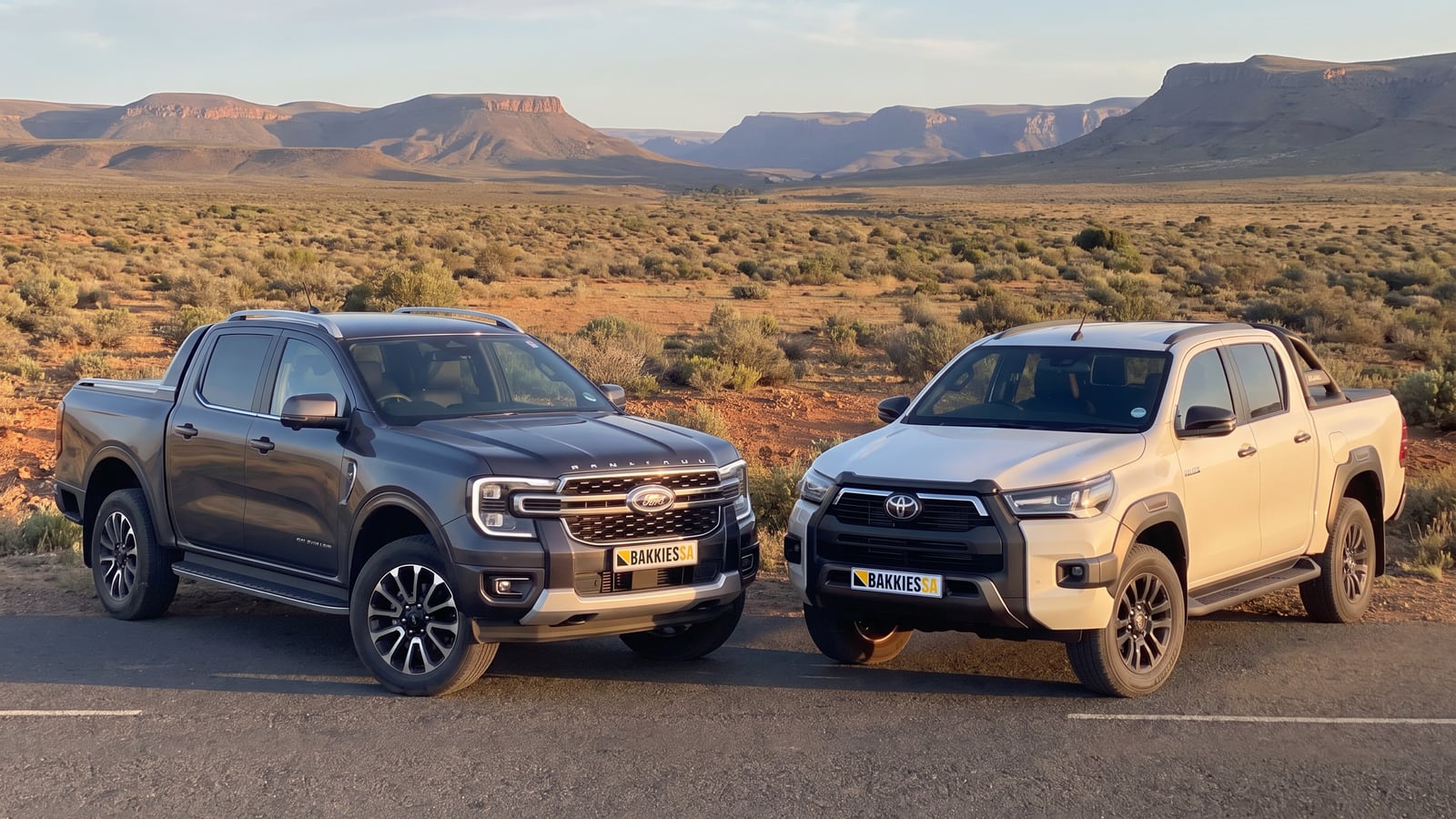
| Hilux Raider and SRX | 265/65R17 | The size most Hilux owners end up buying |
| Hilux Raider X and Legend | 265/60R18 | 18 inch alloys |
| D-Max 1.9 single cab, low ride | 215/70R16C | The base workhorse |
| D-Max 1.9 single cab, high ride | 205R16C | Tall, narrow and built for a load |
| D-Max L and LS grades | 255/65R17 | All-terrain on the 4x4 auto |
| D-Max X-Rider, LSE and V-Cross | 265/60R18 | All-terrain from the factory, on 18 inch alloys |
| Amarok, base grade | 215/70R16 | 16 inch steel |
| Amarok Life | 255/70R17 | Same sizes as the Ranger, because they share a plant |
| Amarok Style and PanAmericana | 255/65R18 | VW sells no all-terrain above an 18 inch wheel |
| Amarok Aventura | 275/45R21 | 21 inch. A low, wide tyre on a one tonne bakkie |
| Navara single cab | 205R16 | All-terrain, on the workhorse size |
| Navara SE, Pro-2X, Pro-4X and Stealth | 255/65R17 | All-terrain. The Pro-4X is not wider than the rest |
| Navara LE | 255/60R18 | Road tyre on 18 inch alloys |
| Navara Pro-4X Warrior | 275/65R17 | The only bakkie here sold on a true light truck tyre |
| Triton single cab | 195R15C | The smallest load-rated tyre in the market |
| Triton GL double cab | 205R16C | 16 inch steel and a load rating |
| Triton GLS and Bi-Turbo | 265/60R18 | 18 inch alloys |
| GWM P300 | 265/60R18 | The off-road grades use 265/65R18 |
| GWM P500, JAC T8, JAC T9 | 265/60R18 | The same size as half the market |
Two things fall out of that table. The first is that 265/60R18 is now the standard bakkie size. The Hilux Legend, the top D-Max, the Triton, both GWMs and both JACs wear it, so it has the widest choice and the biggest price spread.
The second is that Isuzu, Ford and Nissan print the tyre type next to the size. A D-Max V-Cross, a Ranger XLT 4x4 and a Navara Pro-4X all leave the factory on all-terrains.
What the numbers on the sidewall mean
Mitsubishi prints the Triton’s workhorse tyre in full: 205R16C 8PR 110/108R. That one string holds all of it.
| Marking | What it means |
|---|---|
| 205 | The tyre is 205 mm wide |
| 65, as in 265/65R17 | The sidewall is 65 percent of the width |
| No height number, as in 205R16C | It means 80. So 205R16C and 205/80R16 are the same tyre |
| R | Radial. Every tyre you will be shown is one |
| 16 | It fits a 16 inch wheel |
| C | Commercial. A tougher carcass built to carry, not to ride nicely |
| 8PR | The old ply rating. Same idea as the C |
| 110/108 | Two load numbers. One on its own, the lower one in a twin-wheel set |
| R at the end | The speed rating |
The load index is the number people get wrong. You cannot work it out by dividing by ten. It is a lookup.
| Load index | Weight on one tyre |
|---|---|
| 104 | 900 kg |
| 108 | 1,000 kg |
| 110 | 1,060 kg |
| 112 | 1,120 kg |
| 113 | 1,150 kg |
| 116 | 1,250 kg |
| 117 | 1,285 kg |
| 118 | 1,320 kg |
| 120 | 1,400 kg |
| 121 | 1,450 kg |
| 123 | 1,550 kg |
Now the trap. In 205/80R16 a shop can sell you a 104 or a 110. They look the same and cost within a few hundred rand of each other. The 104 carries 160 kg per tyre less than the 110 your bakkie came on. That is most of a passenger gone from every corner.
The speed rating is not a footnote on a bakkie.
| Letter | Top speed |
|---|---|
| Q | 160 km/h |
| R | 170 km/h |
| S | 180 km/h |
| T | 190 km/h |
| H | 210 km/h |
Most mud tyres and the rough-looking all-terrains sold here are rated Q, which is 160 km/h. Driving faster than your own tyre’s rating is an offence, and it is the one tyre offence that has nothing to do with wear. When you replace a tyre, match the letter on the placard or go higher.
The C tyre, and why a workhorse needs it
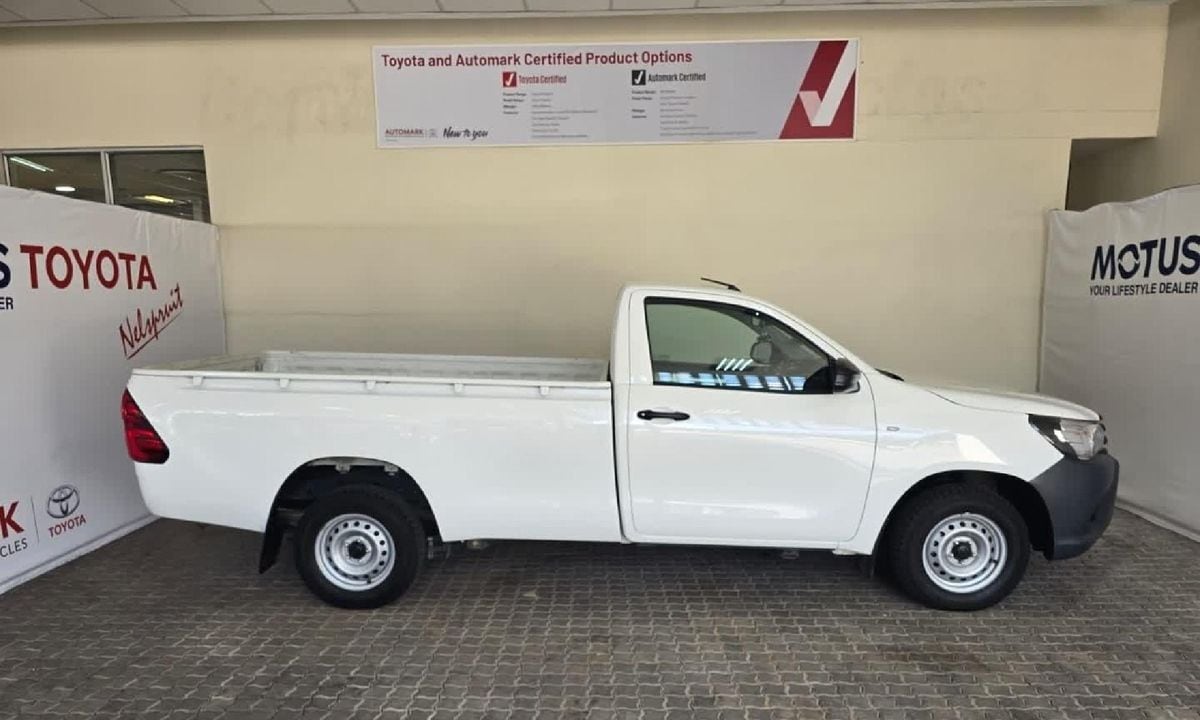
The C on a workhorse tyre is not decoration. It is a stiffer carcass with a higher load number, and the bakkie was designed around it.
The trap is the owner who puts wider, better looking tyres and new wheels on a working bakkie, and drops the load rating below what the sticker asks for. Under the road traffic rules the weight on a wheel may not be more than the tyre is rated to carry.
So do not save money here. Save it on the road tyre of a double cab that never leaves tar, not on the load rating of a bakkie that works for a living.
Road, all-terrain, mud, and the new one in between
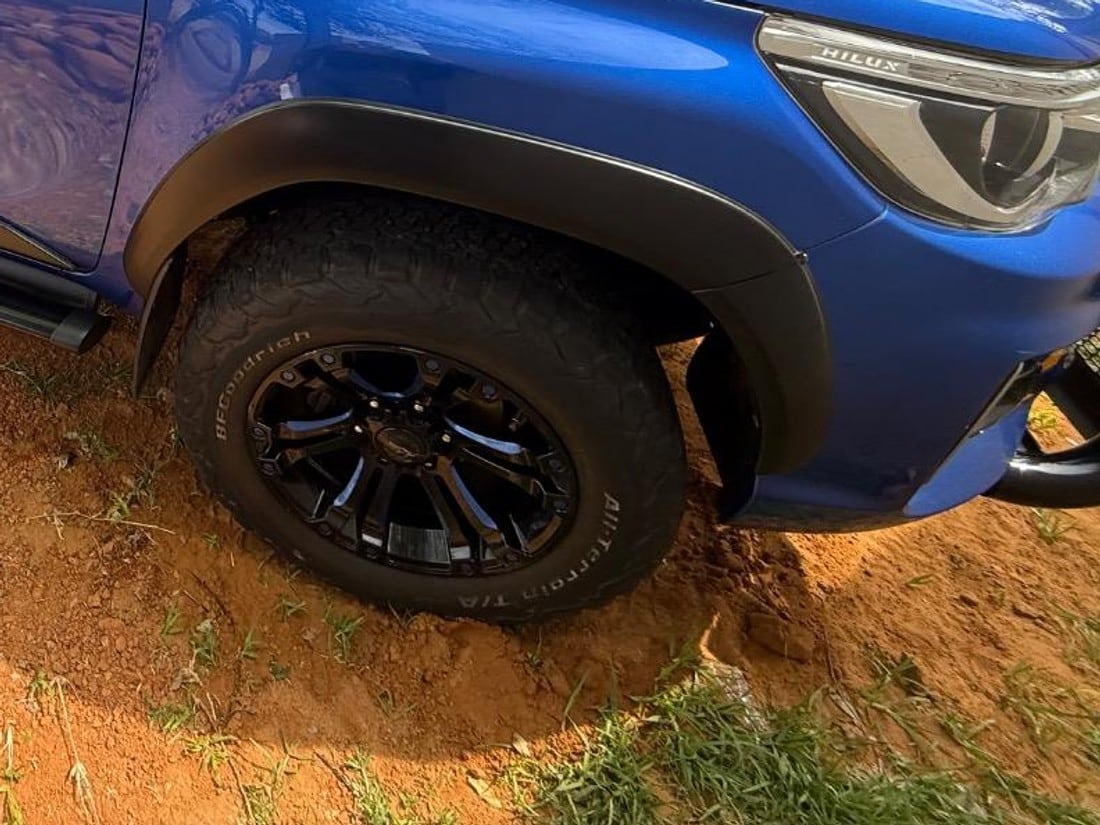
Road tyres. Quiet, long lasting and good in the wet on tar. Fine on a graded dirt road. Most 18 inch and 20 inch bakkies leave the factory on one.
All-terrain. A more open tread and a stronger carcass. Better on gravel, sand and rock, and much harder to cut on a sharp farm road. Heavier and louder.
Mud terrain. A very open, blocky tread for mud and rock. Loud, thirsty, short lived on tar and poor in the wet. On a school run bakkie it is a costume.
Rugged terrain. The new middle name, and the one you will be offered in 2026. Some are honest all-terrains with a tougher shoulder. Some are mud tyres with a softer name. Read the sidewall, not the poster.
What South Africans argue about is not the tread. It is the sidewall. The same tyre name is often sold in two builds: a softer standard one and a light truck version with more plies. On a Namibia trip that matters more than the brand.
One test is worth knowing. In 2018 SA4x4 magazine took 17 sets of all-terrains from 16 brands to Klipbokkop and measured them. The General Grabber AT3 won. The BFGoodrich KO2 came eleventh, at roughly double the price. Almost nothing separated the top seven. The test is old, but the lesson has not moved.
What a set really costs
These are per tyre prices at Tiger Wheel and Tyre on 22 September 2026, in 265/65R17. That is the Hilux Raider size, and the shop lists 43 tyres in it.
| Tyre | Type | Per tyre | Four tyres |
|---|---|---|---|
| GT Radial Adventuro AT3 | All-terrain | R2,589 | R10,356 |
| Dunlop Grandtrek AT25 | All-terrain | R2,999 | R11,996 |
| Bridgestone Dueler A/T 693 | All-terrain | R2,999 | R11,996 |
| General Grabber AT3 | All-terrain | R3,399 | R13,596 |
| Goodyear Wrangler All-Terrain Adventure | All-terrain | R3,399 | R13,596 |
| Continental CrossContact H/T | Road | R4,019 | R16,076 |
| Continental CrossContact ATR | All-terrain | R4,179 | R16,716 |
| Michelin LTX Trail | All-terrain | R4,239 | R16,956 |
| BFGoodrich All-Terrain T/A KO3 | All-terrain | R6,129 | R24,516 |
| BFGoodrich Mud Terrain T/A KM3 | Mud | R7,489 | R29,956 |
Read that table again, because it kills an old story. The five cheapest tyres on that shelf are all all-terrains. The only two proper road tyres in the size cost R4,019 and R4,399 each, more than most of the all-terrains above them. In this size there is no all-terrain premium. There is an all-terrain discount.
The premium lives at the top instead. A set of KO3 costs about twice a set of Grabbers. South Africans buy them anyway, partly for the sidewall and partly for the look in the parking lot. Both reasons are honest. Neither is a bargain.
Then add fitting. Tiger Wheel and Tyre charges R90 a tyre for balancing, R27 a tyre for valves, both compulsory, and R529 for an alignment you should have done. Add about R1,000 a set on top of the rubber.
How long they last, and what kills them
Nobody can tell you how many kilometres you will get. South African owners report one set finished under 20,000 km and another still going past 100,000 km, on the same bakkie and the same brand. Anyone quoting a neat number is guessing.
What decides it is all yours: pressure, alignment, load and rotation. If your handbook gives no interval, rotate every 10,000 km. Forecourt gauges are often wrong, so buy your own.
Age matters too, even on a tyre that has never turned. Supa Quick’s guarantee on a 4x4 tyre runs for 60 months from the day it was made, not the day you bought it. So check the date before it goes on the rim. Every tyre carries four digits in an oval on the sidewall. The code 0626 means week 6 of 2026.
Pressure: empty, loaded and on gravel
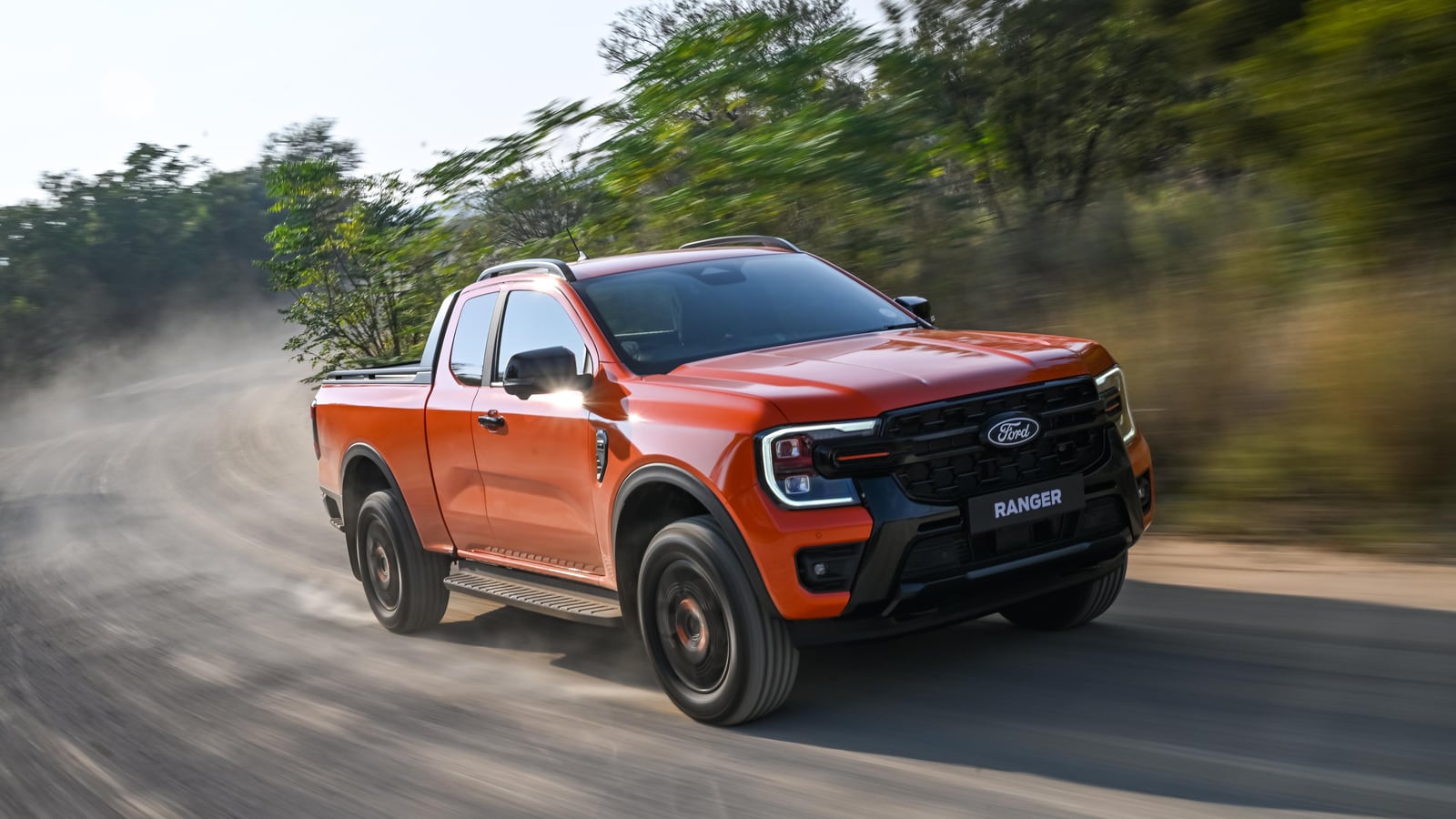
This is where South Africans waste the most tyre money. Here is Isuzu’s own table for the D-Max.
| D-Max on | Front and rear, empty | Front, loaded | Rear, loaded |
|---|---|---|---|
| 205R16C, the workhorse single cab | 32 psi | 38 psi | 58 psi |
| 215/70R16C | 32 psi | 38 psi | 54 psi |
| 255/65R17 or 265/60R18 | 32 psi | 38 psi | 46 psi |
Look at the last column. Empty, every one of those bakkies wants 32 psi all round. Loaded, the back of the workhorse wants 58. Load a single cab and leave the rear at 32, and you are running a tyre at half the pressure Isuzu asks for. That is how sidewalls overheat and burst.
It cuts the other way too. A double cab that carries nothing, left at the loaded pressure, wears out the middle of the tread. That is the most common wear fault here.
On gravel the numbers change again. These are what South African owners run, in bar.
| Where you are | What owners run |
|---|---|
| Town and highway, empty | 2.2 bar |
| Loaded or towing | 2.4 to 2.6 bar |
| Game reserve tracks | 1.8 bar |
| Bad gravel and corrugations | 1.6 bar |
| Thick sand, in low range | 1.4 bar |
Three rules go with that table. Check pressures cold, because a hot tyre reads 0.2 to 0.3 bar higher. Pump up again as soon as you are back on tar, because a soft tyre at speed builds heat and lets go. And a pressure warning light will complain at gravel pressure. That is the light doing its job.
One more thing. Claim on a tyre and the maker’s first answer will be that your pressures were wrong. Your own written record is the only reply.
Going bigger
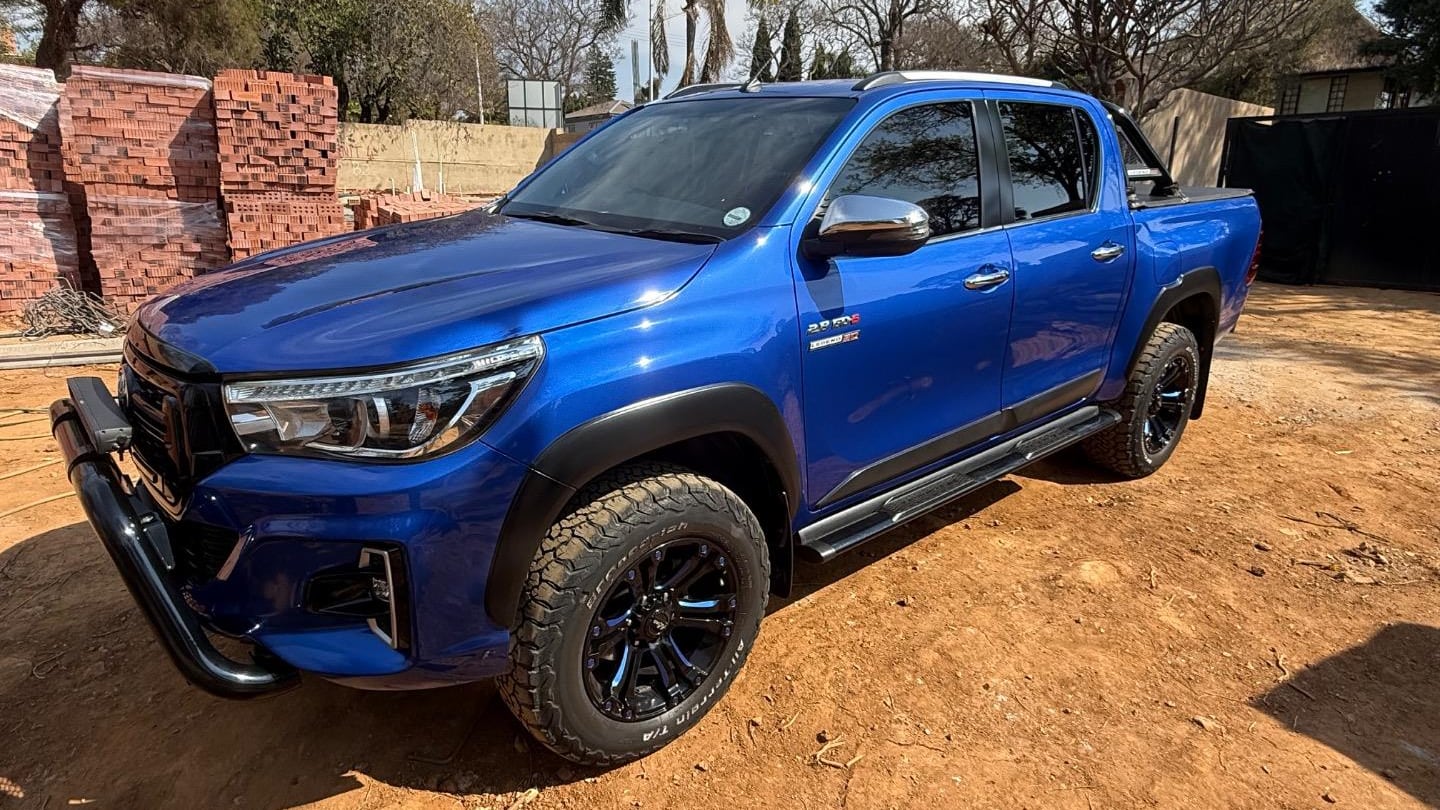
Start with what people really do. Across every bakkie for sale in the country, about 40 adverts mention a lift. Five mention 33 inch or 35 inch tyres. The talk is louder than the doing.
One size up in the sidewall is the common change. Going from 265/65R17 to 265/70R17 makes the tyre about 27 mm taller. It fills the arch, rides a touch softer and gives a little more clearance. Most bakkies take it with no other work, though some find the front bumper catches.
Your speedometer then reads low, by about 3 percent on paper. On the road it is often worse: one owner measured his against a phone map and found 7 percent. So check it yourself on a quiet stretch of freeway.
A 33 inch tyre such as 285/70R17 needs a lift on a standard bakkie. The gearing goes taller, which blunts towing, and a big tyre is a heavy tyre, so it costs fuel.
A 35 inch tyre is a rebuild, not a fitment. Isuzu will sell you a D-Max on 35s, but it needs a cut and flared body and its own suspension, and costs R241,420 more than a V-Cross. Isuzu’s own fuel figure goes from 8.1 to 8.5 litres per 100 km.
The law, and your insurer
The rules are short, and most drivers have never read them.
- The legal minimum tread in South Africa is 1 mm, right across the tyre and all the way round. Tyre makers say replace at 1.6 mm, and every tyre has moulded bars in the grooves to show you.
- A cut that reaches the cords is illegal if it is longer than 25 mm, or longer than a tenth of the tyre’s width, whichever is bigger.
- Any lump or bulge in the sidewall is illegal. That is the tyre coming apart inside.
- Driving faster than your tyre’s own speed rating is an offence.
- The weight on a wheel may not be more than the tyre is rated for.
Now the two rules that do not exist. South African law sets no lift height limit, and no rule about a tyre sticking out past the wheel arch. The limit people quote at each other comes from the Australian rules, not ours. What is true is that a test station can fail a big change on the tester’s own judgement, and an officer can pull your disc at a roadblock.
Your insurer is the sharper risk. One large local insurer’s claim checklist asks for all four tyres to match in size, load number, speed rating and pattern. That is a better reason to buy four of the same thing than any story about the drive train. The same insurer says a tyre can only sink a claim if it can show you knew the tyres were illegal and that they caused the crash. Changes are not covered unless you list them, so tell your broker and keep the invoices.
Tyre and rim cover is a separate product, and paid plans run from R99 to R259 a month. What they leave out is the useful part: a tyre that can safely be repaired, damage outside South Africa, and any bakkie used for work or deliveries. The bakkie that most needs the cover is the one that cannot have it.
What the tyres tell you on a used bakkie
Almost nobody advertises tyres. Of every hundred adverts with a real description on live listings, only about three mention a tyre, and the brand named is usually BFGoodrich. So you check this yourself, in the yard. It is one of the quickest reads on how a bakkie was treated.
- Four matching tyres of a known brand, worn evenly, mean an owner who looked after things.
- Four different budget tyres mean a fleet that bought the cheapest one each month.
- Worn on one edge, or feathered, means the alignment is out. On a bakkie that often means something is bent underneath.
- Cracked sidewalls on a low mileage bakkie mean it stood in the sun for years.
- Check the four digit date on all five tyres. A dealer’s “new tyres” can be old stock.
- Check the load number and speed letter against the sticker in the door, not just the size.
- Find the spare and check it holds air. It ages under the load bin where nobody looks.
A set is R12,000 to R15,000 fitted on most double cabs. If the bakkie in front of you needs them, take that off the price.
Which tyre for which driver
The bakkie works and carries a load. Keep the C rating and the load number the door asks for. Put the saving into an alignment and a gauge.
Tar, town and the odd dirt road to a farm gate. A mainstream all-terrain in the factory size. The Grabber, the Dunlop, the Dueler and the Wrangler all sit between R3,000 and R3,700 a tyre, and a local test could not separate the best of them.
Gravel every week, or a trip into Namibia. Pay for the sidewall, not the tread. Ask for the light truck version of whatever you choose, and check the plies before they fit it.
You want the look. Fine, but buy it with your eyes open. The KO3 is a fine tyre and costs about double a Grabber. Stay on the smaller wheel if you get the choice, because a taller sidewall rides better and costs less to replace.
Whichever you pick, get the alignment done, write down the pressure you run, and check the date code first. Then look at the bakkies for sale, priced against the going rate for the year.
Questions people ask
What tyre size does a Toyota Hilux use?
It depends on the grade. The cheapest single cab runs 205/70R15C on 15 inch steel wheels. Every SR grade, single cab and double cab, runs 225/70R17C on steel wheels. The Raider and the SRX run 265/65R17 on alloys, and that is the size most Hilux owners buy. The Legend runs 265/60R18. Those come off Toyota South Africa's own spec sheets, issued on 22 September 2026. There is no GR-Sport in the current double cab range. Check the sticker in the driver's door before you buy anything.
Are all-terrain tyres worth it on a bakkie?
In the most common bakkie size they now cost you nothing extra, so the old argument is over. At Tiger Wheel and Tyre on 22 September 2026, the five cheapest tyres in 265/65R17 were all all-terrains. The only two proper road tyres in that size cost R4,019 and R4,399 each. What an all-terrain buys you is a thicker shoulder and a tougher carcass, which is worth real money on gravel and in potholes. What it costs you is noise, weight and a lower speed rating. A mud tyre is a different thing and it is a poor buy for a bakkie that lives on tar.
What does it cost to fit four bakkie tyres in South Africa?
Add about R1,000 to the price of the rubber. Tiger Wheel and Tyre's own checkout charges R90 a tyre for balancing and R27 a tyre for valves, both compulsory, and R529 for a wheel alignment, which you should have done. So four General Grabber AT3 in 265/65R17 at R3,399 each come to R13,596 for the tyres and about R14,600 out the door, at that shop on 22 September 2026. Phone three shops before you commit, because the same tyre can be R700 a corner cheaper down the road.
Can I fit bigger tyres to my bakkie?
One size up in the sidewall usually fits with no other changes. Going from 265/65R17 to 265/70R17 makes the tyre about 27 mm taller. Your speedometer then reads low by about 3 percent, so check it against a phone map on a quiet stretch of freeway. A 33 inch tyre such as 285/70R17 needs a lift on a standard bakkie. South African law sets no lift height and no rule about a tyre sticking out past the arch, but a test station can still fail you and an officer can pull your disc. Your insurer will not cover a change you did not tell them about.
Figures are seller asking prices aggregated from South African listing platforms and dealers, not final selling prices. Most vehicles transact below asking. Updated continuously.
tyresownershipspecs